
October 2026 · About 6 minutes
The frame was built to the opening on the drawing, and the opening on the jobsite is a different size.
The foreman calls from the site. The storefront frame for opening 108 is on the floor, the rough opening is 3/8 of an inch narrower than the field dimension on the release, and the block wall is not moving. He wants to know whether to cut the frame down, send it back, or wait for a new one. He needs an answer today because the crew is standing there.
This is not a rare call, and the right answer is not always the same one. Here is how to make it in the order that keeps the frame, the finish, and the schedule from getting worse.
Construction tolerances: what the frame was built to expect
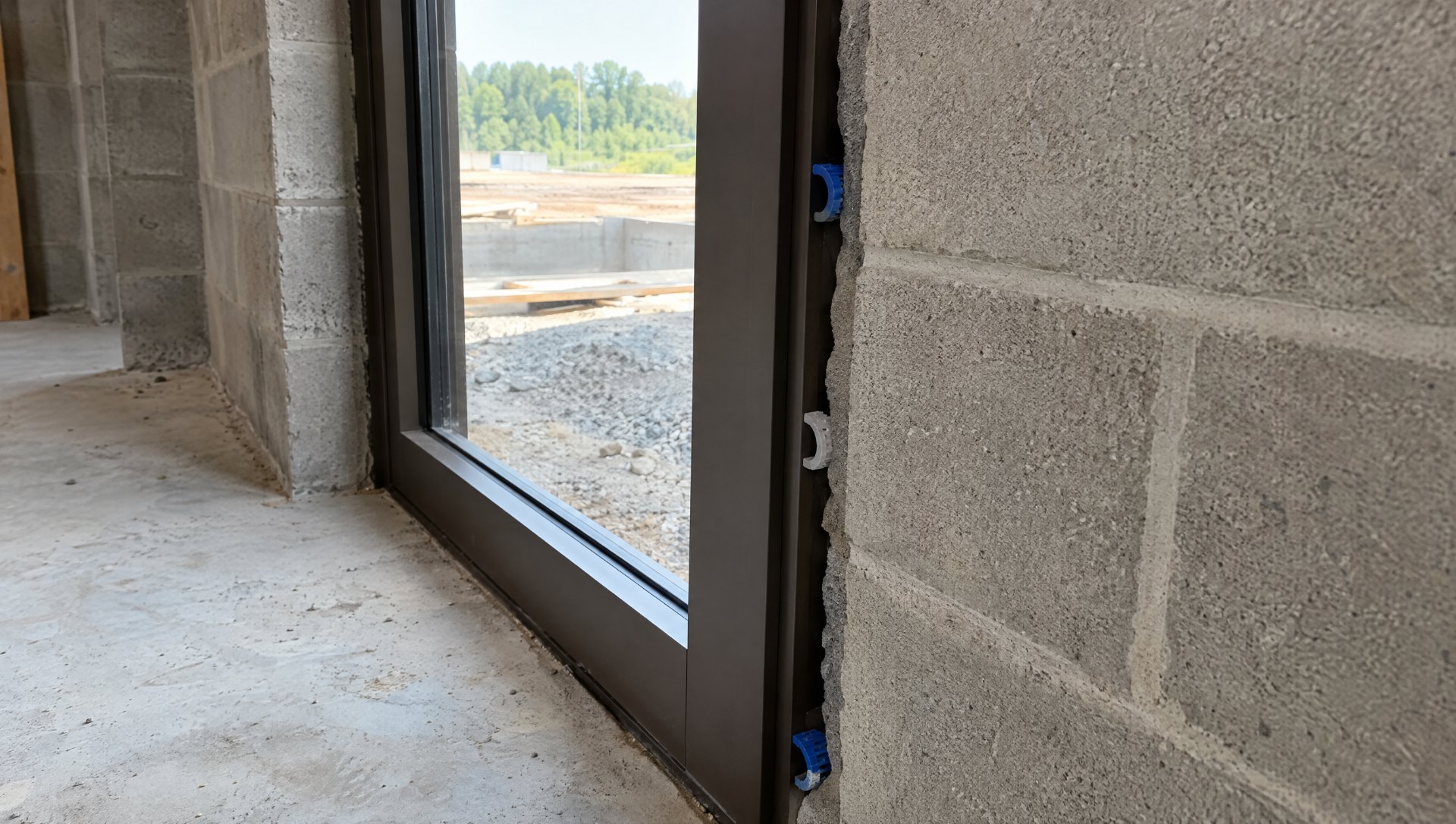
Nothing on a jobsite is built exactly as drawn. The LearnGlazing Glazing Systems Interaction Details course puts it plainly: openings can be out of square, steel can deflect, framing tolerances accumulate as construction goes on, and each trade is allowed to be off by a certain amount. The storefront frame is sized for a nominal rough opening plus the clearance the system needs: the shim space at the jambs and the gap under the subsill. On a typical storefront install the manufacturer’s instructions call for about a quarter inch under the subsill and an eighth at the jambs, with horseshoe shims to hold the joints and keep the frame from bowing when it is fastened.
That clearance is the tolerance the frame can absorb. If the rough opening is a quarter inch wide, the shim stack gets a little thicker and nobody notices. If it is 3/8 narrow, the frame does not fit, and something has to change.
Reverify the rough opening before deciding anything
The first move is not a decision. It is a measurement. The number the foreman called in came from one tape at one height. Before anyone cuts anything, measure the opening at the head, the middle, and the sill, and check plumb on both jambs and level on the sill, with a laser if the crew has one. Then compare against the release, not against the drawing: what field dimension was the frame actually built to, and who took it? A 3/8 difference at the sill with the jambs plumb is a different problem from 3/8 at the head with a jamb leaning in.
Then find out exactly what changed. Is the opening narrower, shorter, out of square, or in a different place than the setback assumed? Which pieces of the fabricated frame are affected: both jambs, one jamb, the head, the sill, the door? A frame that is 3/8 narrow across the whole height may need two pieces shortened. A frame that is 3/8 narrow at the sill and right at the head is an out-of-square opening, and the fix is not in the frame at all.
Modify on site, send it back, or remake
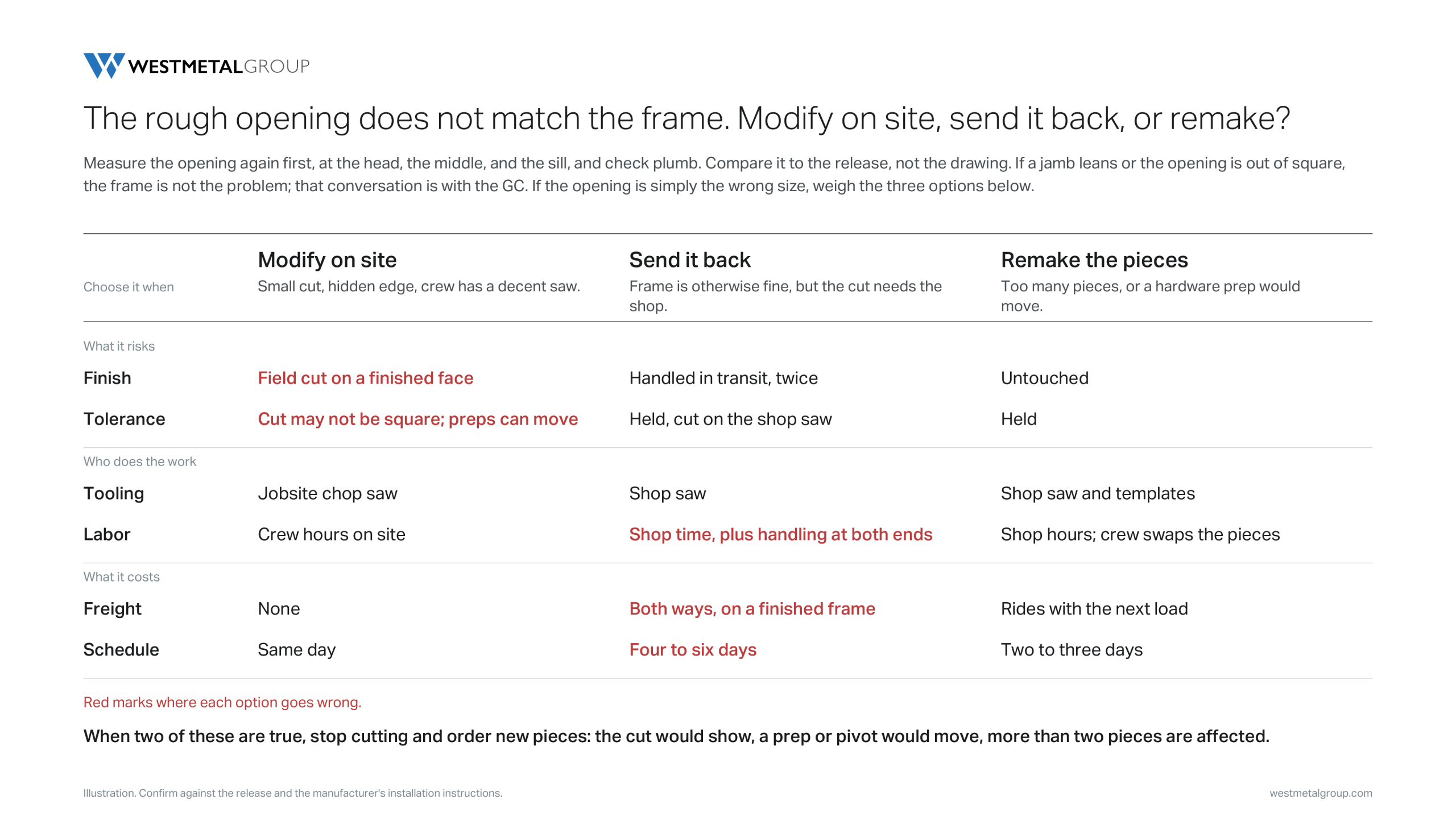
Once you know what changed and what it touches, the three options line up against the same six factors: finish damage, tooling, tolerances, labor, freight, and schedule.
- Modify on site. Right when the change is small, the cut is simple (shortening a horizontal, trimming a sill), the crew has a chop saw and a way to hold the piece square, and the cut edge will be covered or is on an unfinished face. Wrong when the cut lands on a finished face that will show, when it moves a hardware prep, a pivot location, or a weep, or when the crew would be freehanding a notch a shop would do on a machine. Field modification is cheap in freight and fast in schedule, and it is where finish damage and out-of-tolerance frames come from.
- Send it back to the fabricator. Right when the modification needs the shop’s tooling or a square cut on a finished piece, the frame is otherwise usable, and there is schedule for a round trip. Costs freight both ways, the handling, and the days. Protects the finish and the tolerances because the shop is cutting on the same equipment that built it.
- Remake. Right when the change touches too many pieces, when a modified frame would end up outside the system’s tolerances or with hardware preps in the wrong place, or when the round trip would take longer than cutting new. Costs the material and the shop hours, and it is sometimes the fastest option, because a new frame can be cut tomorrow while a returned frame waits in the queue behind the truck.
A worked example
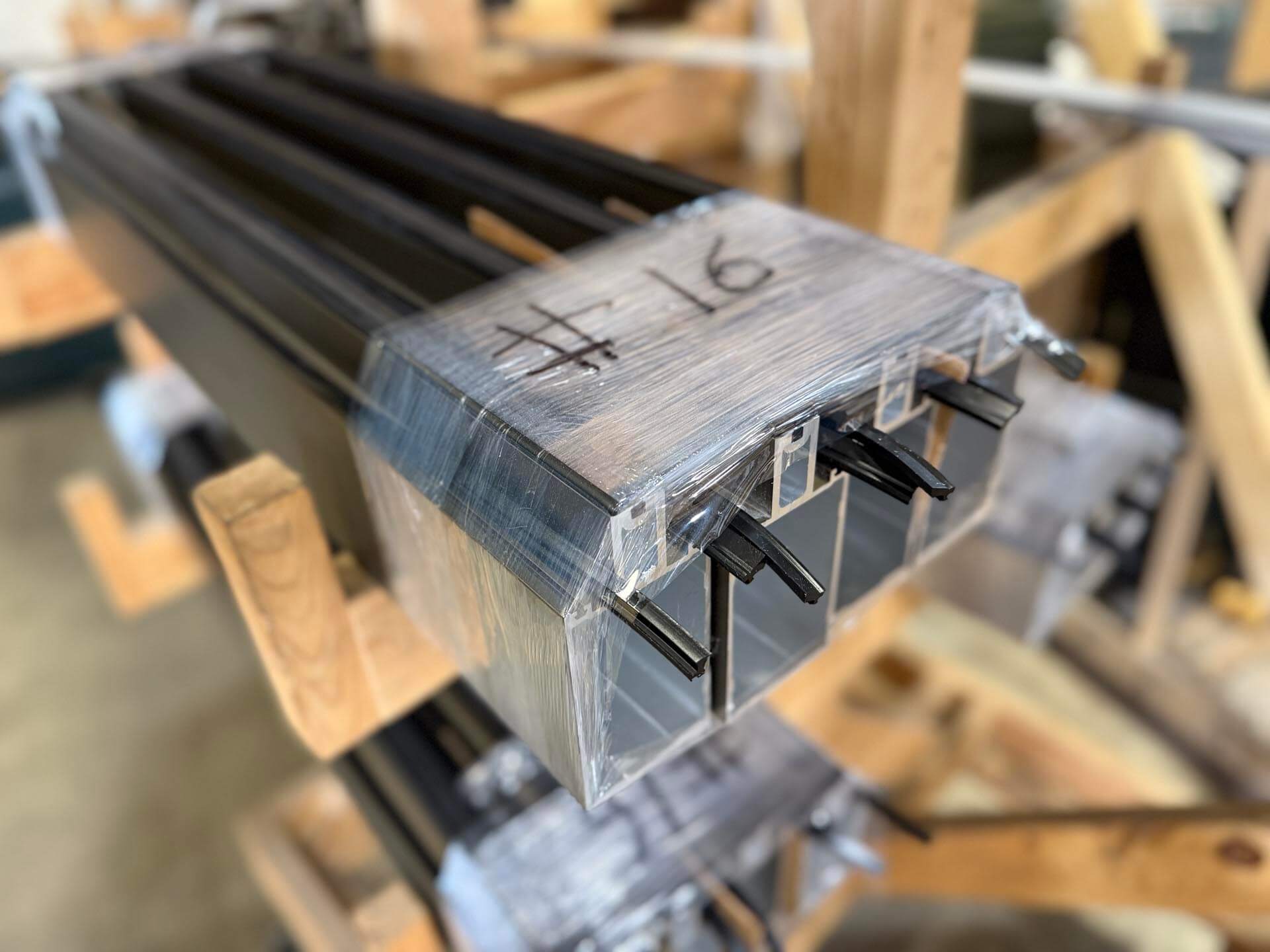
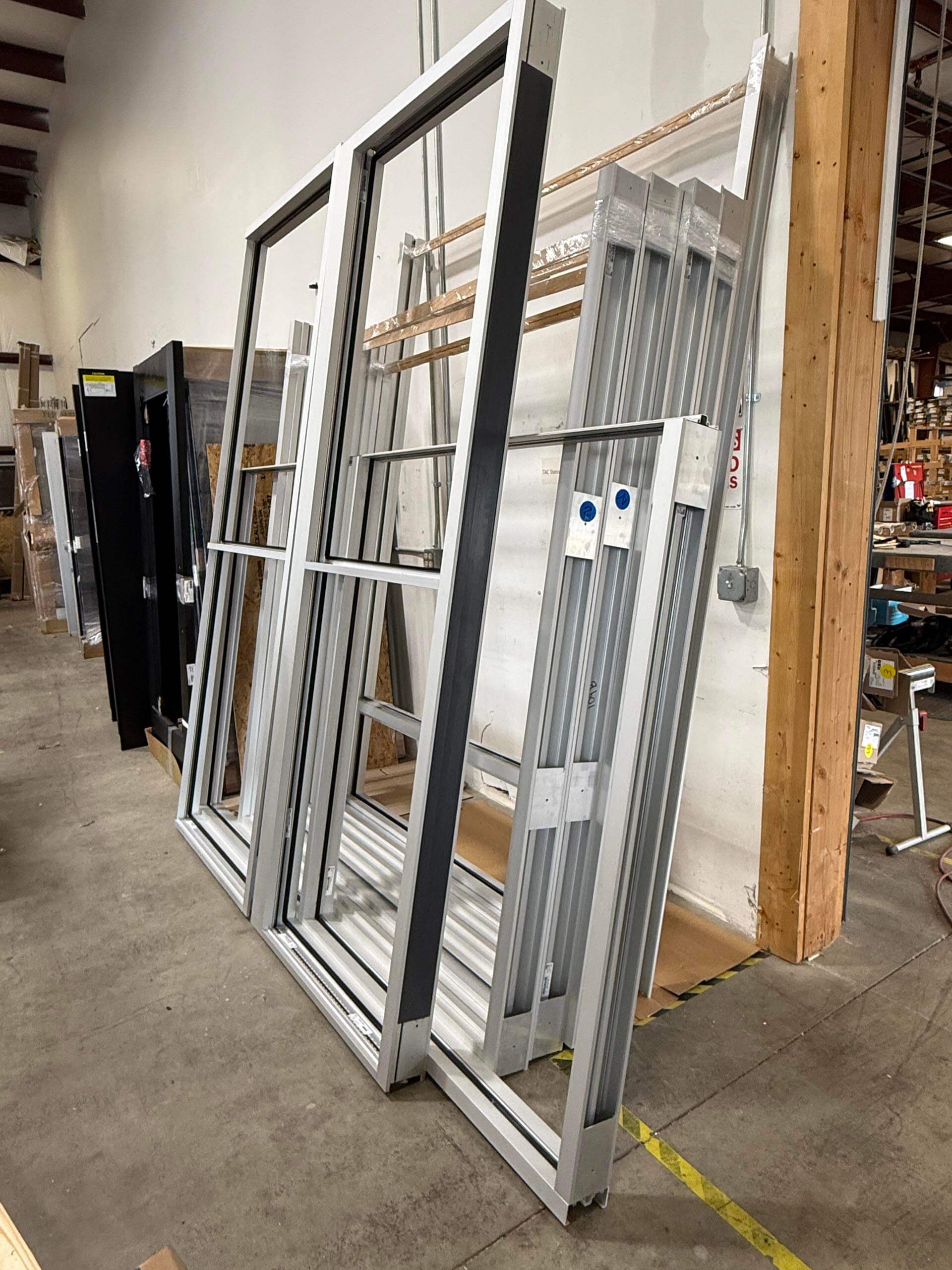
Opening 108, dark bronze anodized storefront, 2 by 4-1/2 center set, one frame 8 feet wide by 9 feet tall with a single door. The rough opening measures 3/8 narrow at the sill and 1/8 narrow at the head after remeasuring at three heights; the jambs are plumb. The shop assembled the frame; the horizontals are cut and the door jamb is prepped for pivots and a closer.
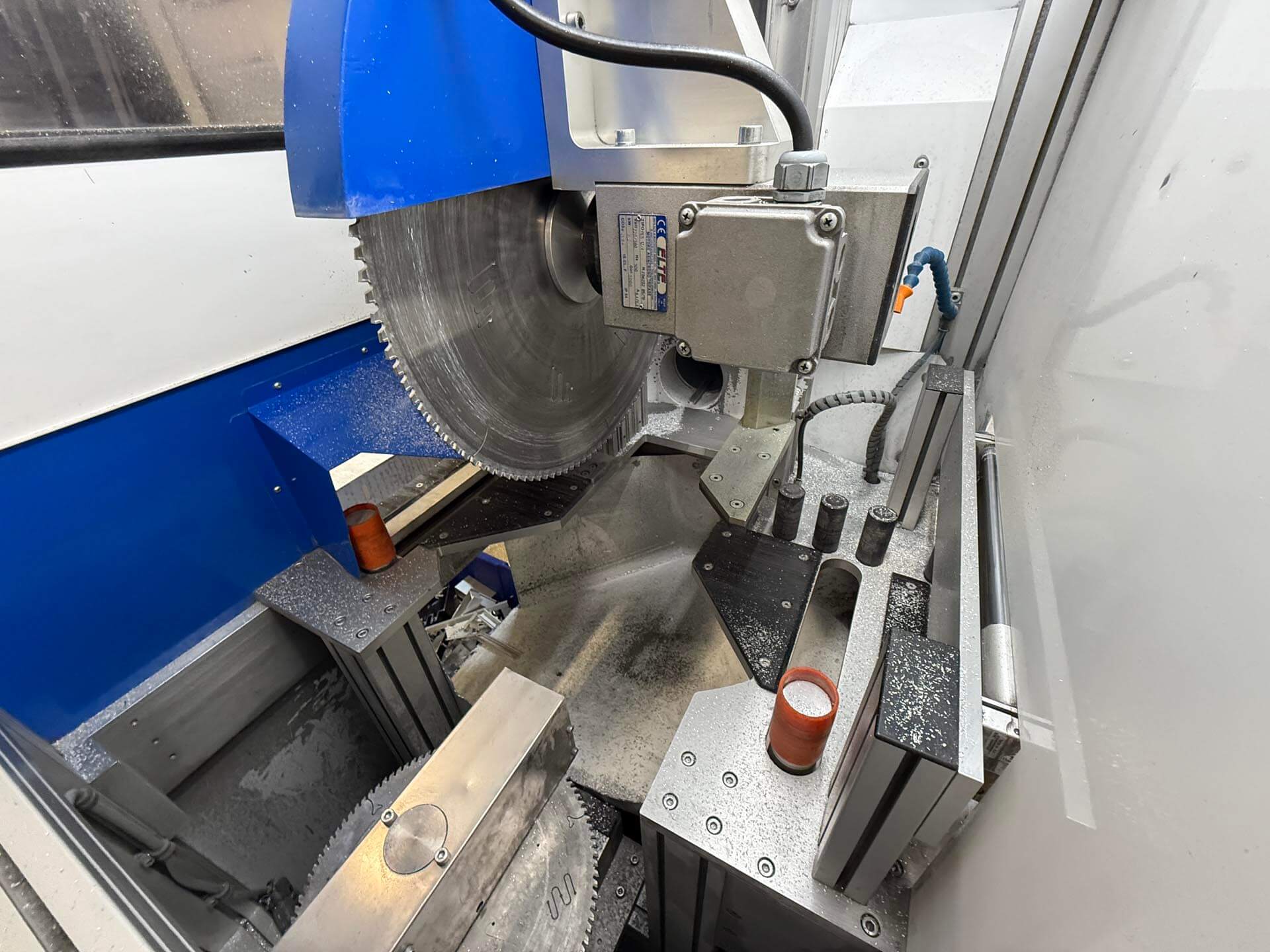
Modify on site: shorten the sill and the bottom horizontal by 3/8, which means disassembling the bottom corner, cutting two dark bronze pieces on the jobsite saw, and re-assembling. Two crew hours. The cut ends are inside the jamb pocket, so the finish is covered. The weep slots in the sill move 3/8 off the drawing. Risk: a cut that is not square, a scratched sill face in the handling. Freight zero. Schedule: same day.
Send it back: frame goes back on the next truck, the shop recuts the sill and horizontal square on the saw, re-assembles, and returns it. Freight both ways and two handling steps on a finished frame. Schedule: four to six days depending on the truck. Risk: handling damage in transit, twice.
Remake: the shop cuts a new sill and bottom horizontal from stock, dark bronze, and ships them with the next load; the crew swaps the pieces. No full frame moves. Schedule: two to three days for finished stock on hand, longer if the finish has to be ordered. Risk: lowest to the finish and the tolerances.
On that example, modifying on site is the fast answer and the remake of two pieces is the safe one; the full send-back is the worst of both. If the foreman’s crew has a decent saw and the cut ends really are hidden, site modification is defensible. If the opening is 3/8 narrow because the jamb leans, nothing in the frame fixes it, and the conversation is with the GC.
Know when a remake is the cheaper option
A field fix that forces a second field fix costs more than a remake, every time. The signs that a remake is the safer and less expensive choice: the modification moves a hardware prep or a pivot; the finished face would show a field cut; the frame would end up outside the manufacturer’s tolerances for the glass bite or the gasket; more than two pieces are affected; or the crew would be improvising a cut the shop does with a template. When two of those are true, stop cutting and order the pieces.
The takeaway
Before modifying anything, compare the true cost and risk of a field repair, a shop modification, and a full remake. Remeasure the opening at three heights and check plumb before deciding, find out exactly which pieces the change touches, and run the three options against finish, tooling, tolerance, labor, freight, and schedule. The fast fix is right only when the cut is simple and the edge is hidden.
WestMetal Fabrication recuts or remakes affected pieces for glazing contractors from the original release, on the same equipment that built them, and ships replacement pieces with the next load rather than waiting on a full frame return when that is faster. See what WestMetal fabricates.
Learn the fundamentals on LearnGlazing
Two free LearnGlazing courses cover the ground this article skips. Glazing Systems Interaction Details walks through shop operations and delivery considerations, and Foundations of Storefront Installation explains knocked-down, shop-assembled, and pre-glazed packaging. WestMetal Group is a LearnGlazing partner through the GlazierIQ network. Browse the full course catalog.
Bob Baumann
Sales, WestMetal Group
I have been on the fabrication side of glazing for a long time, and before WestMetal I ran a shop floor where the release was the thing that decided whether the week went well or badly. I still read every package that comes in before it goes to the saw, and I still call the PM when something on it does not add up. WestMetal Group is part of the GlazierIQ network with MP Drafting and LearnGlazing. Questions about an article or a package? Send it to Bob.
</div >