
October 2026 · About 6 minutes
The first thing a fabricator does with a release is look for what is missing.
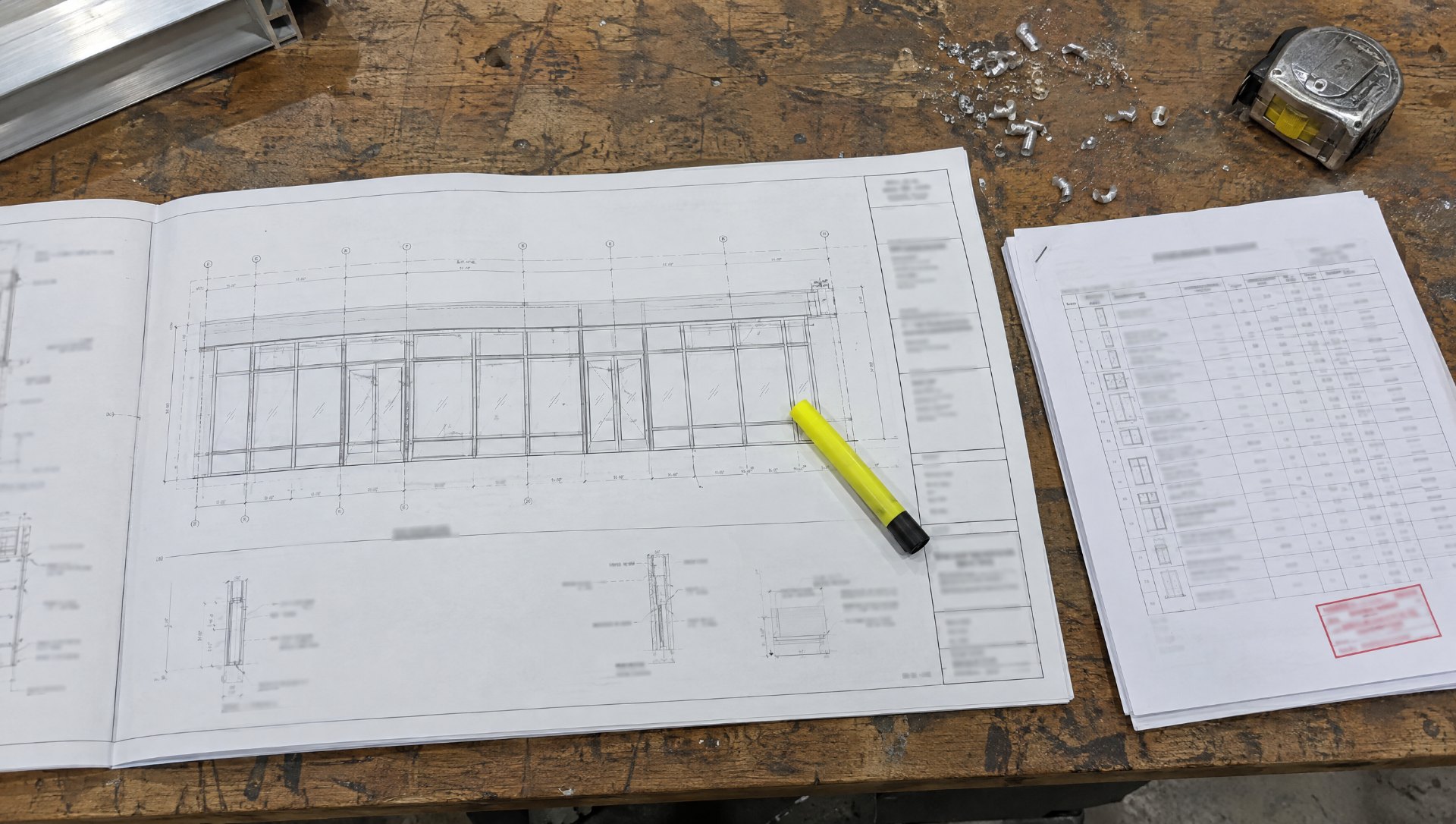
Not out of habit. Out of experience. The email says “released for fab, drawings attached,” and the attachment is the approved submittal set with the architect’s stamp on it and the hardware schedule from three revisions ago. Before anyone cuts anything, somebody in the shop has to find the current hardware schedule, confirm the finish, ask which elevations are in this release and which are not, and get a date. That is a day, sometimes a week, of the shop working on your project without building any of it.
A fabrication release is a set of documents, not an email. Here is what each one has to contain for aluminum storefront, curtain wall, and entrance work, in the order the shop reads them.
Fabrication drawings: the drawings the shop builds from
Fabrication drawings are not the submittal set. The submittal set is drawn to get approval from the architect; fabrication drawings are the same set revised for the shop after approval, with the review comments picked up, the field dimensions or guaranteed opening sizes in place, and every elevation, opening, and detail the shop needs to build from. The LearnGlazing Introduction to Fabrication course puts it plainly: fabrication starts when you have approved shop drawings, approved submittals, either field measurements or guaranteed opening sizes, and the material, and the shop drawings get revised for shop use and the cut lists get built from them.
What has to be on them, for an aluminum storefront or curtain wall release:
- Elevations with opening numbers that match the schedule, the tags on the bundles, and the floor plan. One numbering system, used everywhere.
- Dimensions the shop can cut to. Frame sizes, daylight openings, mullion spacing, and door sizes, with the field dimension written in where it replaced the design dimension. A drawing with “VIF” still on it is not released.
- The system and the series. Manufacturer, series, depth, glazing method (front set, center set, back set), and infill thickness, so the shop pulls the right extrusions and the right gaskets.
- Details called out, not implied. Head, sill, jamb, horizontal, and entrance details, each referenced from the elevation it applies to, plus the fabrication-specific items: notch requirements, and which bays ship assembled and which ship loose.
- Revision clouds and a revision date. If the drawings moved after approval, the shop needs to see where.
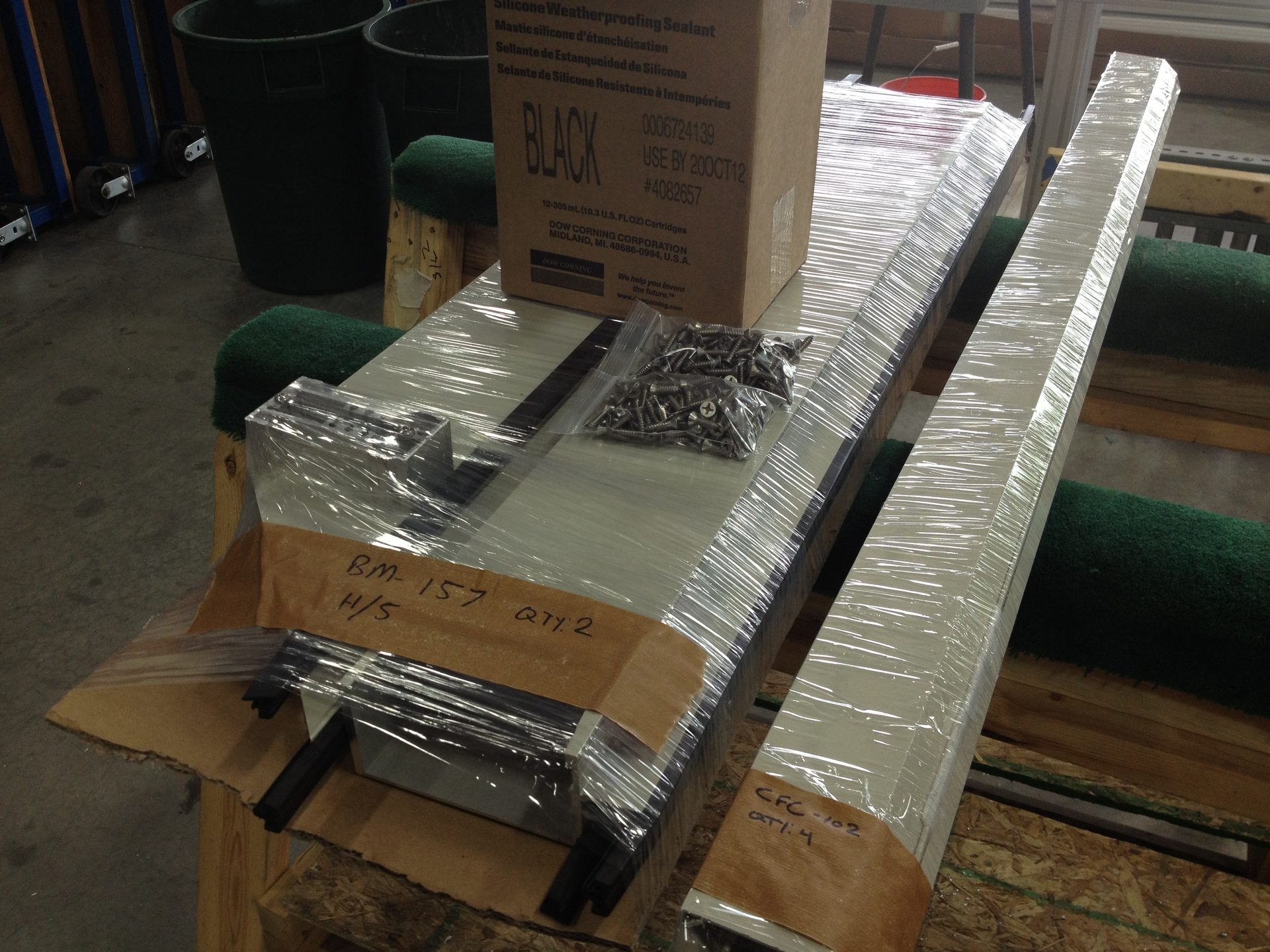
Door hardware schedule: the current one, not the submitted one
The door hardware schedule tells the shop what to prep each door and frame for. The one in the approved submittal is usually not the one that gets installed; hardware changes between approval and release more than any other part of the package, because the hardware consultant, the owner’s access-control vendor, and the GC all touch it. The release needs the current schedule, dated, with the revision noted, and it needs to match the door schedule opening for opening.
For each opening the shop needs: handing (with a diagram, not just a letter), the pivot or hinge set, the closer and its mount, the lock or exit device by model, pulls and push bars, the threshold, and any electrified device with its power transfer. Every device the shop has to prep for needs the manufacturer’s template on file. The entrance release article walks through the six details that go wrong most often; the schedule is where they get written down.
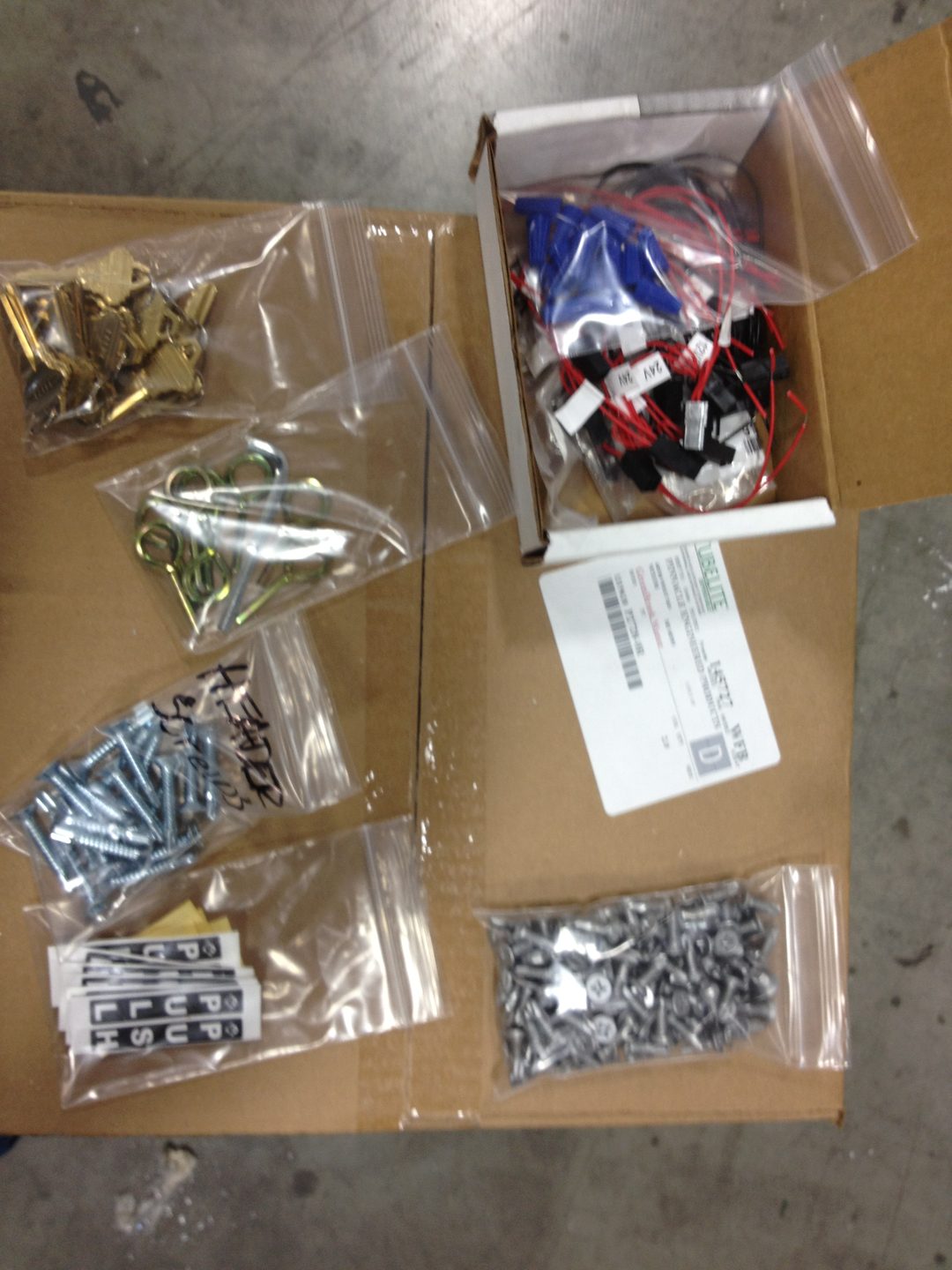
Finish schedule: what the shop checks the material against
The finish was decided in the specifications, approved in the submittal, and shown on the shop drawings, so the fabricator is not making that call. The shop still needs it on the release. It is how the shop confirms that the material that arrived matches the finish on the job, which finish to pull when anything comes from stock, and whether the job has more than one finish: exterior and interior faces that differ, doors that differ from the frames, or one elevation in a different color. Say which finish goes where by opening or elevation. Material that arrives in the wrong finish does not go back through the finishing process; it gets re-ordered.
Quantities belong here too, or on the cover sheet: how many of each frame type, how many doors, and whether the release is the full elevation or a phase of it.
The cover sheet: one page that answers the questions the shop would otherwise ask
The documents above answer “what.” The cover sheet answers “which, when, and who.” It is one page on top of the release that identifies the project, the phase, which elevations and openings are in this release, the required delivery date, the ship-to and the contact, and anything unusual about the job: a tight loading dock, a sequence the field needs, a finish split, a long-lead hardware item that is coming late.
A filled-in example, for a storefront release:
Fabrication release cover sheet
Project: Maple Ridge Medical Office Building, 2200 Maple Ridge Dr
Contractor PM: (name, cell, email)
Release: 2 of 3, Elevations E2 and E3, openings 104 through 118 (15 frames, 2 pairs of doors)
Not in this release: E1 (release 1, shipped), E4 (release 3, pending field dimensions)
Required delivery: November 20, 2026, to jobsite, east dock, 8 ft clearance, liftgate required
Drawings: Fab set rev 3, dated 11/3/2026, field dimensions on E2 and E3 confirmed 10/28
System: (manufacturer) 2 x 4-1/2 center set storefront, 1 inch insulated glass; medium stile doors
Hardware schedule: rev C, dated 10/30/2026, attached; templates attached for closers, pivots, exit devices
Finish: Class I clear anodize, frames and doors; interior face same
Assembly level: frames shipped assembled; doors prepped, hung in frame, hardware shipped loose
Bundling: by opening number, E2 then E3, opening numbers on every tag
Unusual conditions: Openings 110 and 111 are electrified (card reader, electric strike); wire path per detail 7 on sheet D-2
Questions to: contractor PM first; the shop does not call the GC
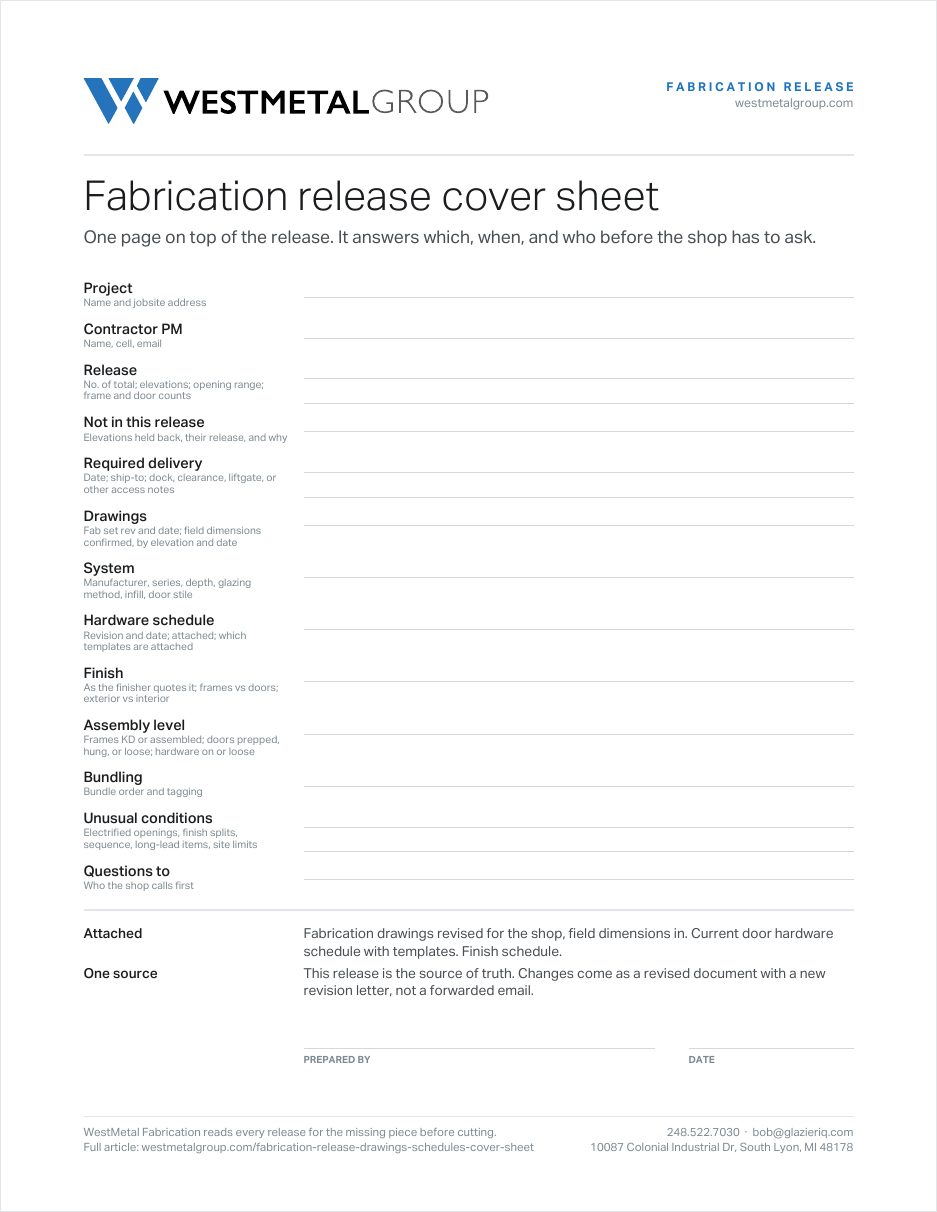
Fillable cover sheet
One page, the thirteen fields above with a blank line for each. Type into it or print it and fill it by hand. Keep it on top of every release. No sign-up.
One source of information
The last thing the shop needs is a rule: the release is the source of truth, and changes come through the same channel. When the hardware schedule changes after release, the PM sends a revised schedule with a new revision letter, not a forwarded email from the hardware supplier with “see below.” When a field dimension changes, the fab drawing gets revised, not the cut list. The shop should be able to answer “what am I building” by opening one folder, and it should never have to decide which of two emails is current.
This is also where the cover sheet earns its keep. If the only place the delivery date, the phase, and the contact exist is in the body of an email, they are lost by the second revision. On the cover sheet, they are the first page the shop sees every time.
The takeaway
A clear, complete release lets your fabricator spend time building your project instead of tracking down missing information. Before you hit send: fabrication drawings revised for the shop with field dimensions in; the current door hardware schedule with templates; a finish schedule that says which finish goes where; and a one-page cover sheet with the project, phase, openings, date, and anything unusual. If any one of those is missing, the shop’s first day on your project is spent asking for it.
WestMetal Fabrication reads every release for the missing piece before cutting, builds its cut lists from the contractor’s fabrication drawings, and preps to the hardware schedule and templates the contractor supplies. See what WestMetal fabricates.
Learn the fundamentals on LearnGlazing
Two free LearnGlazing courses cover the ground this article skips. Introduction to Fabrication walks through shop operations and delivery considerations, and Submittal and Approval Process explains knocked-down, shop-assembled, and pre-glazed packaging. WestMetal Group is a LearnGlazing partner through the GlazierIQ network. Browse the full course catalog.
Bob Baumann
Sales, WestMetal Group
I have been on the fabrication side of glazing for a long time, and before WestMetal I ran a shop floor where the release was the thing that decided whether the week went well or badly. I still read every package that comes in before it goes to the saw, and I still call the PM when something on it does not add up. WestMetal Group is part of the GlazierIQ network with MP Drafting and LearnGlazing. Questions about an article or a package? Send it to Bob.
</div >