
October 2026 · About 6 minutes
A frame comes off the truck with a gray streak down one jamb, and the next twenty minutes decide whether the job lost a frame or lost nothing.
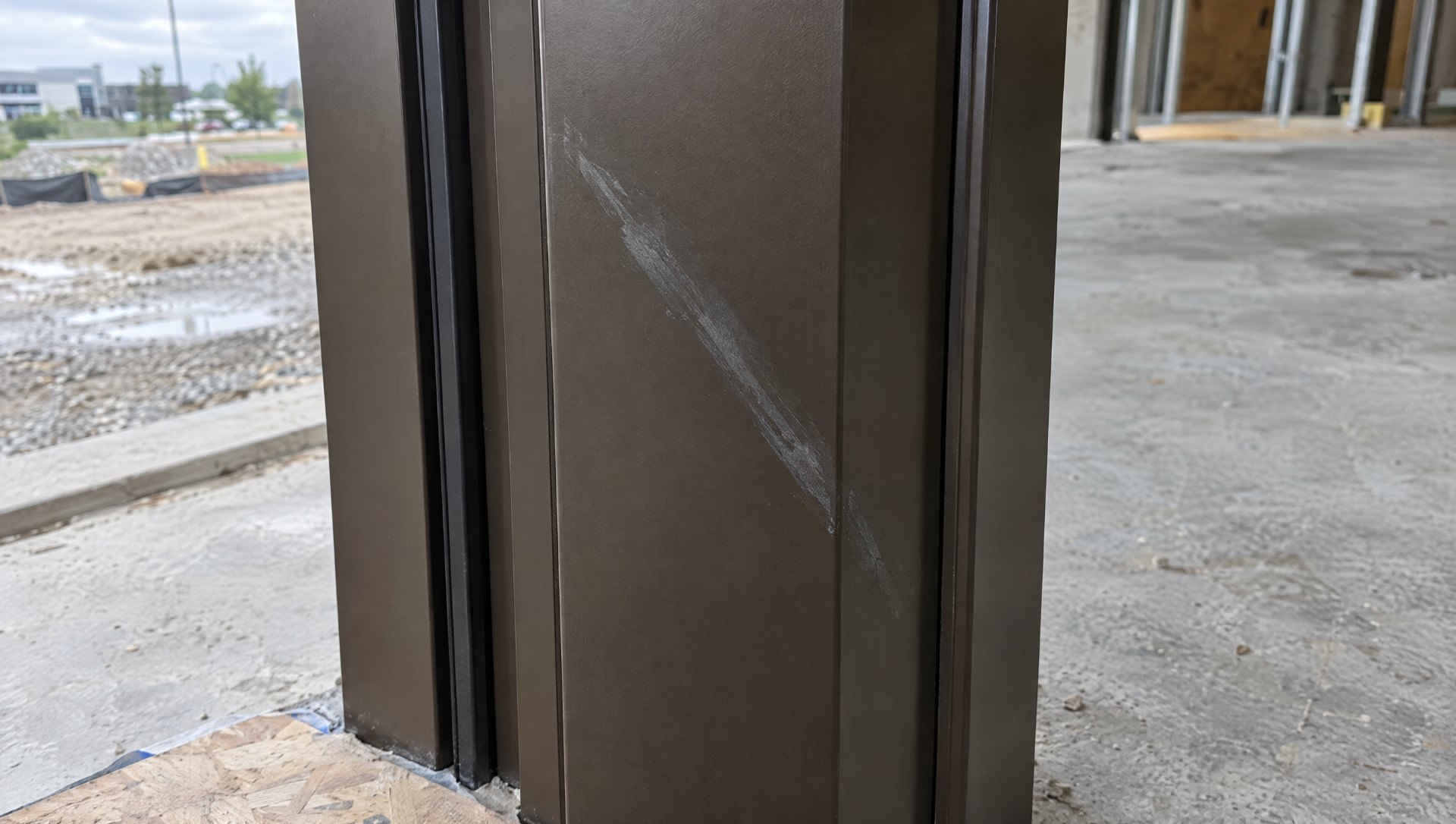
The installer wants to know if he can set it. The super wants to know who pays for it. You want to know what you are looking at, and that is the right first question, because the same streak means two different things on two different finishes.
Identify the Finish First: Anodized or Painted Aluminum
Anodized aluminum is not coated. Anodizing grows the oxide layer of the aluminum itself into a hard, clear or dyed surface, so the finish is part of the metal. Under AAMA 611 a Class I anodize is at least 0.7 mil thick and a Class II is at least 0.4 mil (Products Finishing on AAMA 611). That is thinner than a sheet of paper, and when something cuts through it you see bright aluminum underneath. There is no anodize in a can. Nothing you apply in the field is anodize; it is paint matched to the anodize color, and it will read as paint up close.
Painted aluminum is a coating on top of the metal. On commercial storefront that usually means a 70 percent PVDF finish (Kynar 500 or Hylar 5000 resin) baked on by a finisher such as Linetec, or a powder coat. Paint has thickness you can take a little off of, and the same finisher that painted the extrusion sells an air-dry touch-up in the same color. Touch-up paint is not the factory finish, and it does not weather like it, but it exists.
So before anyone decides anything, confirm the finish from the order, not from looking at it. Dark bronze anodize and dark bronze paint look alike on a jobsite. Your purchase order or the finish schedule says which one you have, and the repair question is different for each.
Which Scratches, Scuffs and Rub Marks Can Be Repaired
Start with what the mark is, because a mark on a frame is not always damage to the finish.
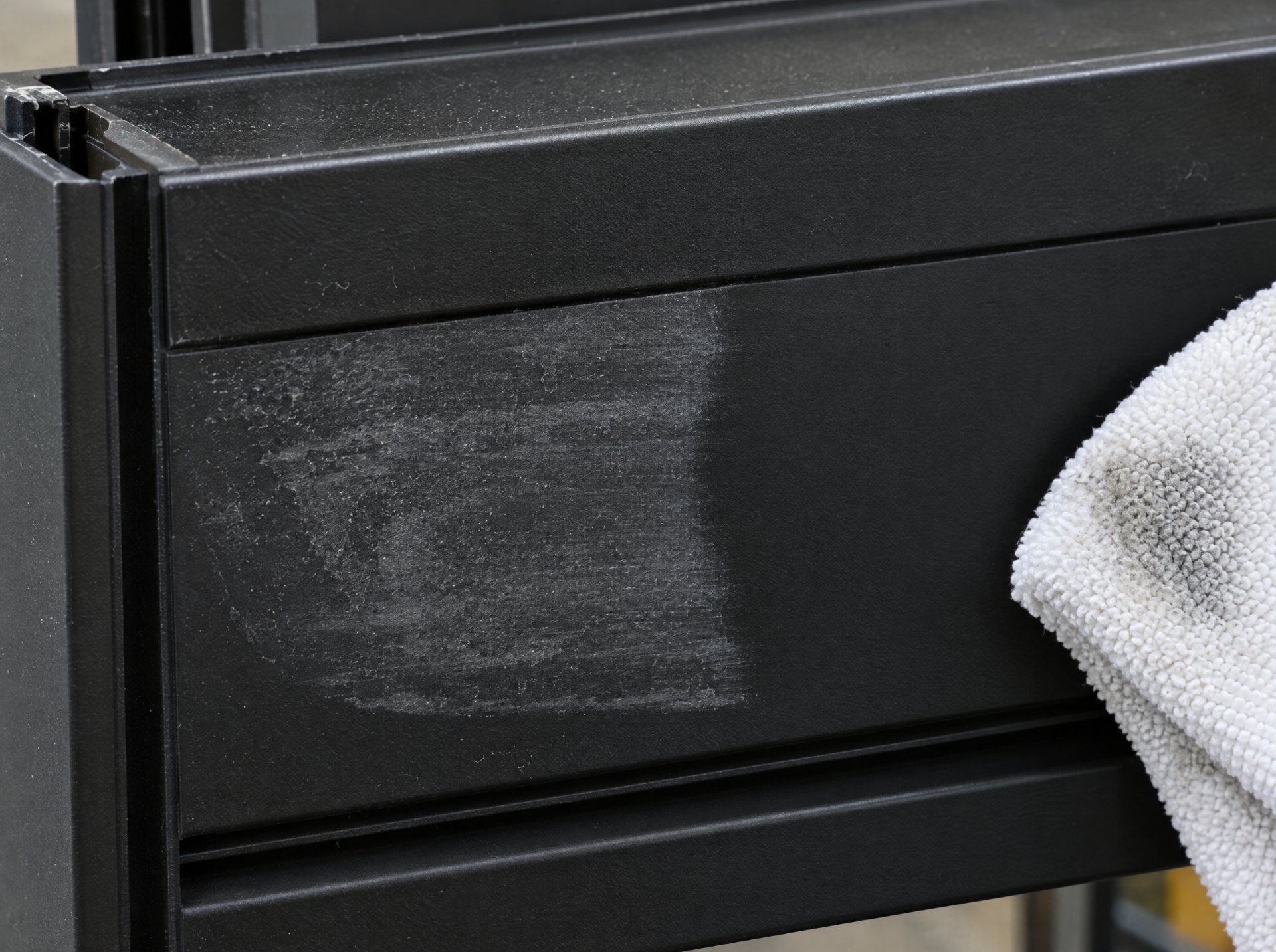
Transfer marks. A gray or black streak where a strap, a pallet, or another frame rubbed against the finish is often material rubbed onto the surface, not finish rubbed off. Try the easy thing first: mild detergent and water on a soft cloth, then isopropyl alcohol if the detergent does not move it. If the streak comes off and the surface under it is uniform, nothing was damaged, and the frame goes in.
Scuffs in the finish. A dull patch on paint where the gloss is abraded but the color is intact can sometimes be brought back with a mild polish made for painted metal. On anodize a dulled area is harder to recover, because the sheen is in the oxide and not in a top coat. A scuff you only see from an angle at arm’s length gets left alone.
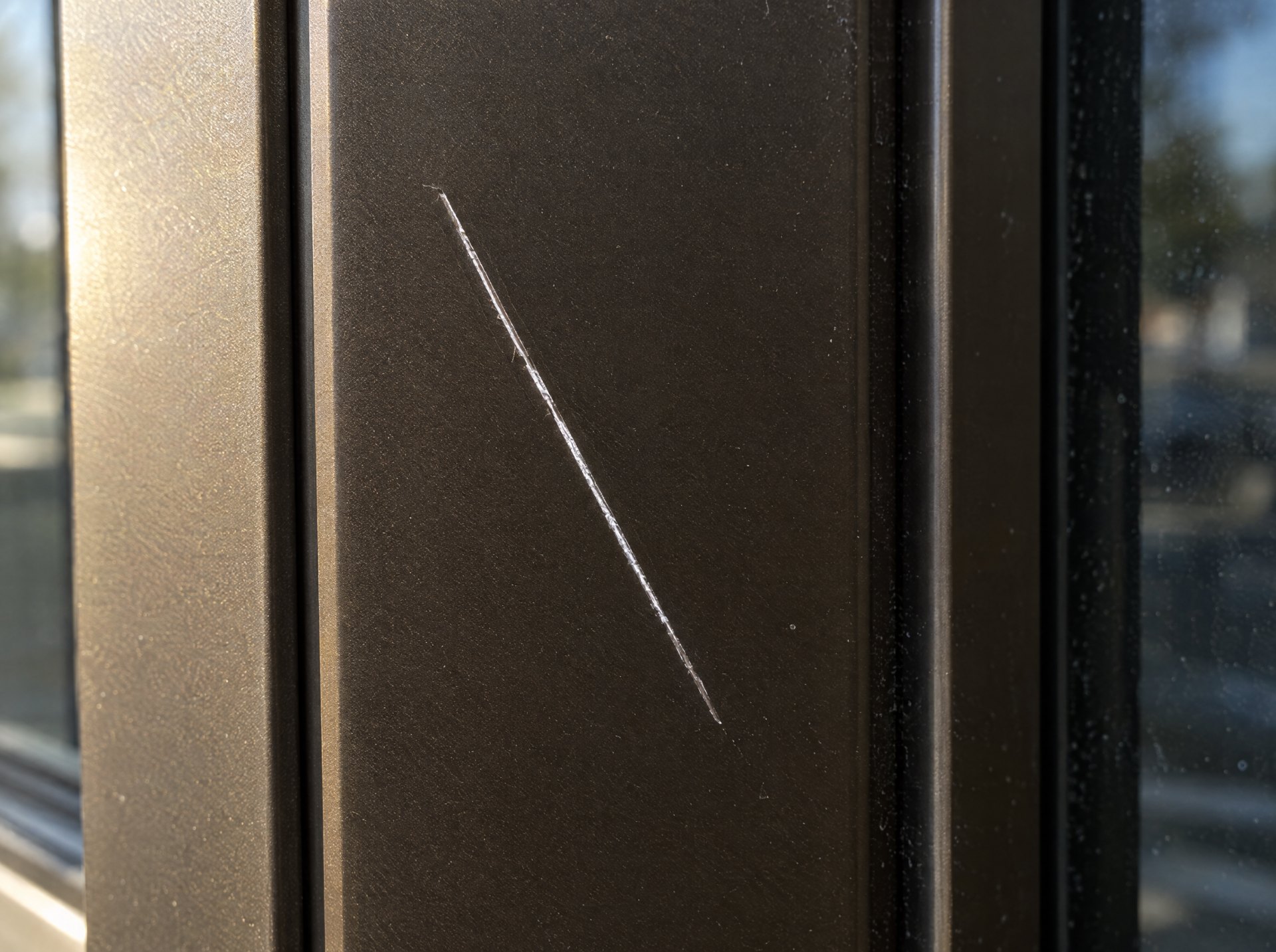
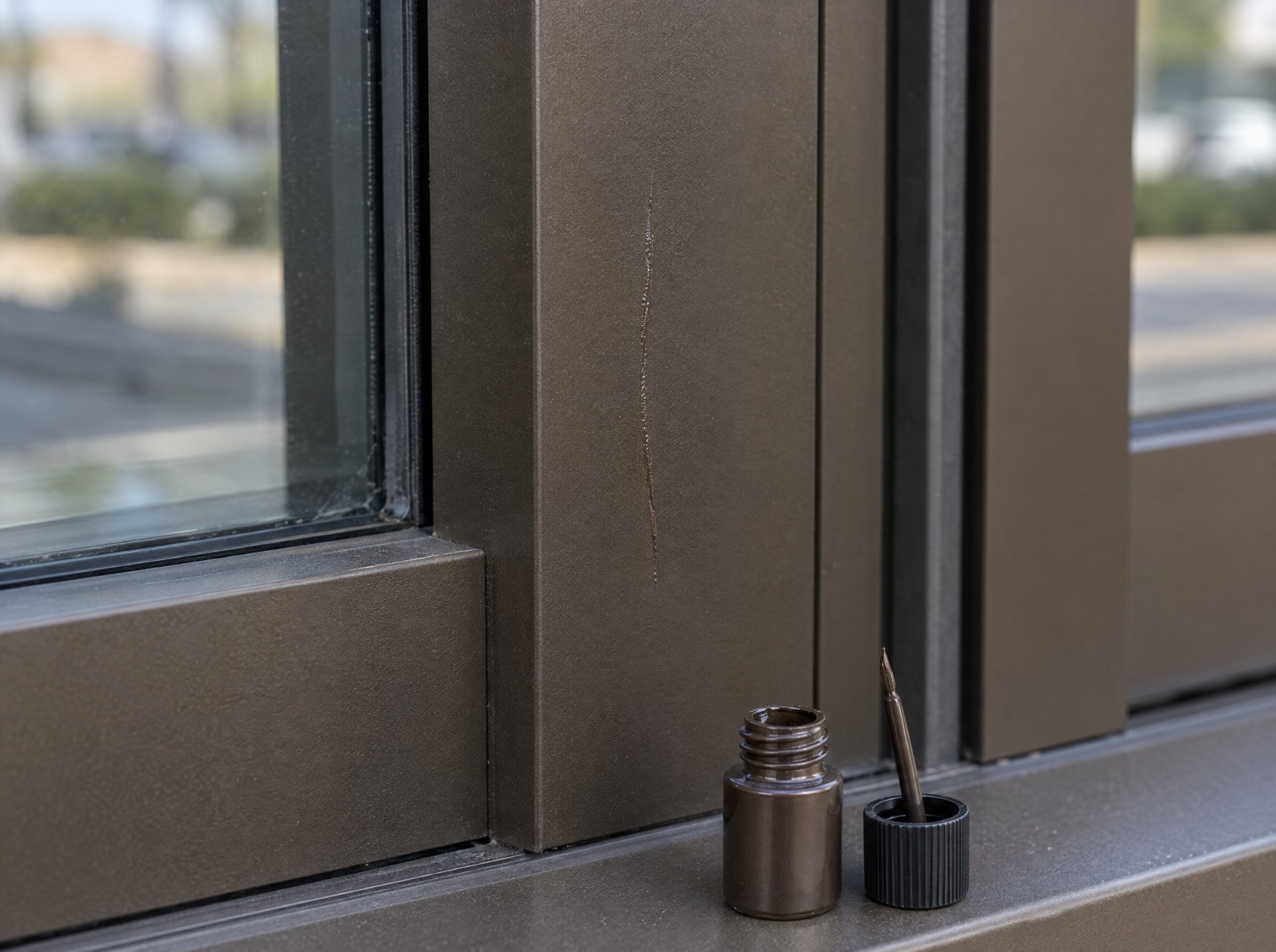
Scratches through the finish. If the mark shows bright aluminum, the finish is gone at that line. On paint, a touch-up pen or a fine brush with the finisher’s air-dry paint fills the scratch and keeps the metal covered, and on a dark color at normal viewing distance it disappears well enough. On anodize, the same touch-up covers the metal but the repair stays visible: the touch-up is flat where the anodize has depth, and it ages differently. The Metal Construction Association’s guidance on field touch-up says it plainly: air-dry touch-up is for small areas, the panel or extrusion supplier should be consulted before using it, and in some cases replacing the piece is the better choice (MCA, Application Guidelines for Field-Applied Touch-up Paint Systems).
Gouges and dents. A gouge you can feel with a fingernail, a dented face, or a bent edge is a replacement. Paint can hide a gouge; it cannot fill one, and a dent reads under any finish.
What Touch-Up Can and Cannot Do on High-Visibility Elevations
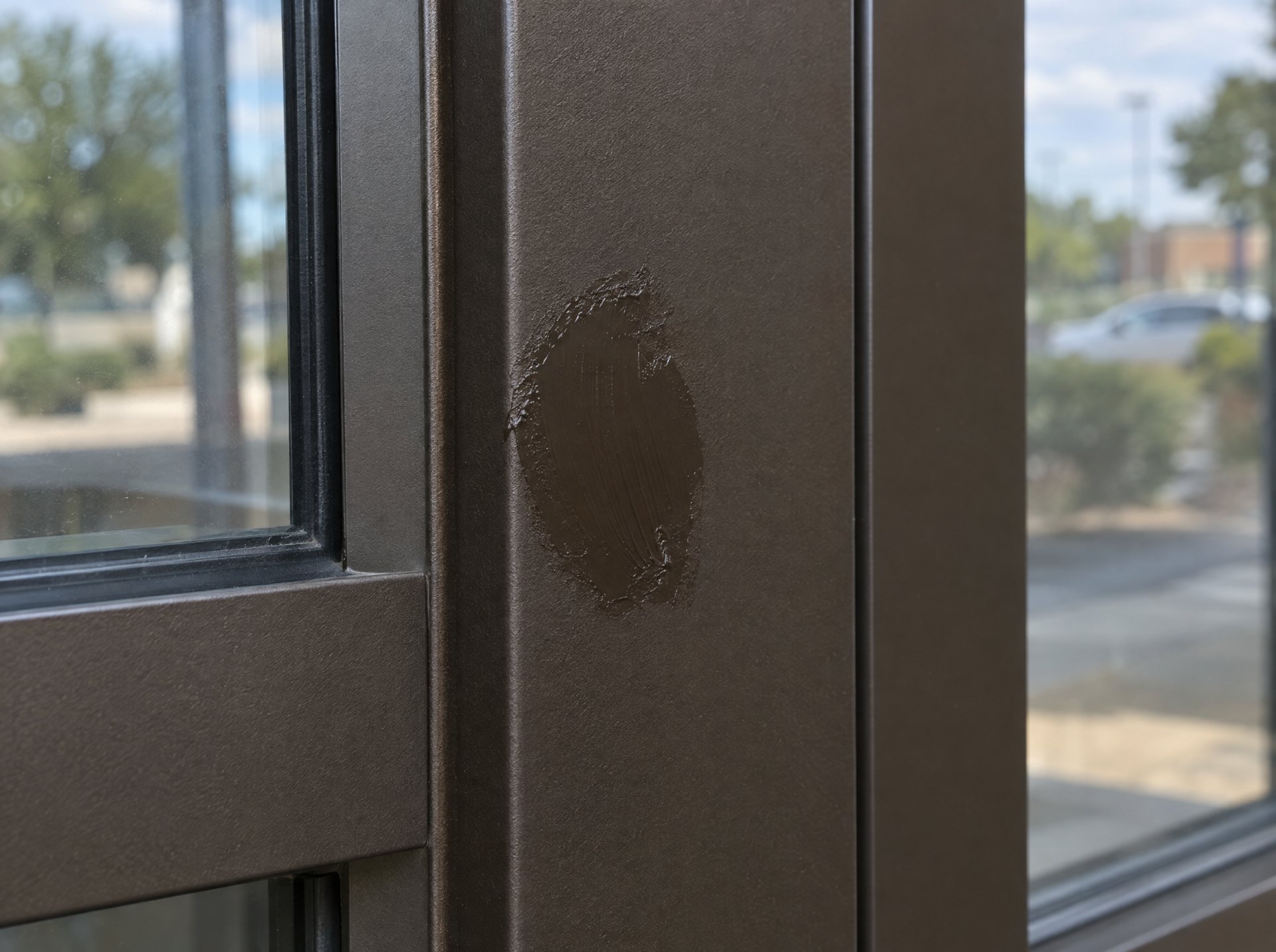
Touch-up is a repair, and it should be judged like one. Ask the finisher for the touch-up that matches the paint code on the order, not a hardware-store color that is close. Apply it in the scratch, not around it. A touch-up that is wider than the scratch is a bigger mark than the scratch was.
Where the repair sits matters as much as how big it is. A touched-up scratch on a jamb at knee height behind a planter is a repair nobody will find. The same scratch at eye height on the pull side of the entrance, on clear anodize or a light gray paint, is one the owner finds on the walkthrough. On those elevations, show the mark and what touch-up will look like, and let the customer choose between a repair and a replacement before the frame is set, because a replacement after the glass is in costs far more than one before.
Damage From Other Trades After Installation
The damage that turns up on the walkthrough was done after the frame was in the wall, by trades that were never told the finish was finished. Mortar splatter and masonry cleaners etch anodize if they sit; drywall mud and joint compound dull paint if they dry on it; welding spatter burns into both; a painter’s overspray lands on everything. None of that is a fabrication problem, and all of it becomes the glazier’s problem on the walkthrough unless it is documented when it happened.
Two habits keep that straight. Photograph every frame the day it is set, with the date, before the other trades get to it. And leave the shipping protection on the exposed faces as long as the schedule allows, then take it off before the sun bakes the adhesive onto the finish; ask the finisher how long their film is rated to stay on.
Preventing Rub Marks in Shipping: Foam, Separation and Packaging
A rub mark that arrives on a truck was made by another piece of aluminum, a strap, or a rack, and that is the part of this article a fabricator controls. LearnGlazing’s Introduction to Fabrication covers the delivery questions in its Delivery Considerations lesson; what follows is the packing side of the same list.
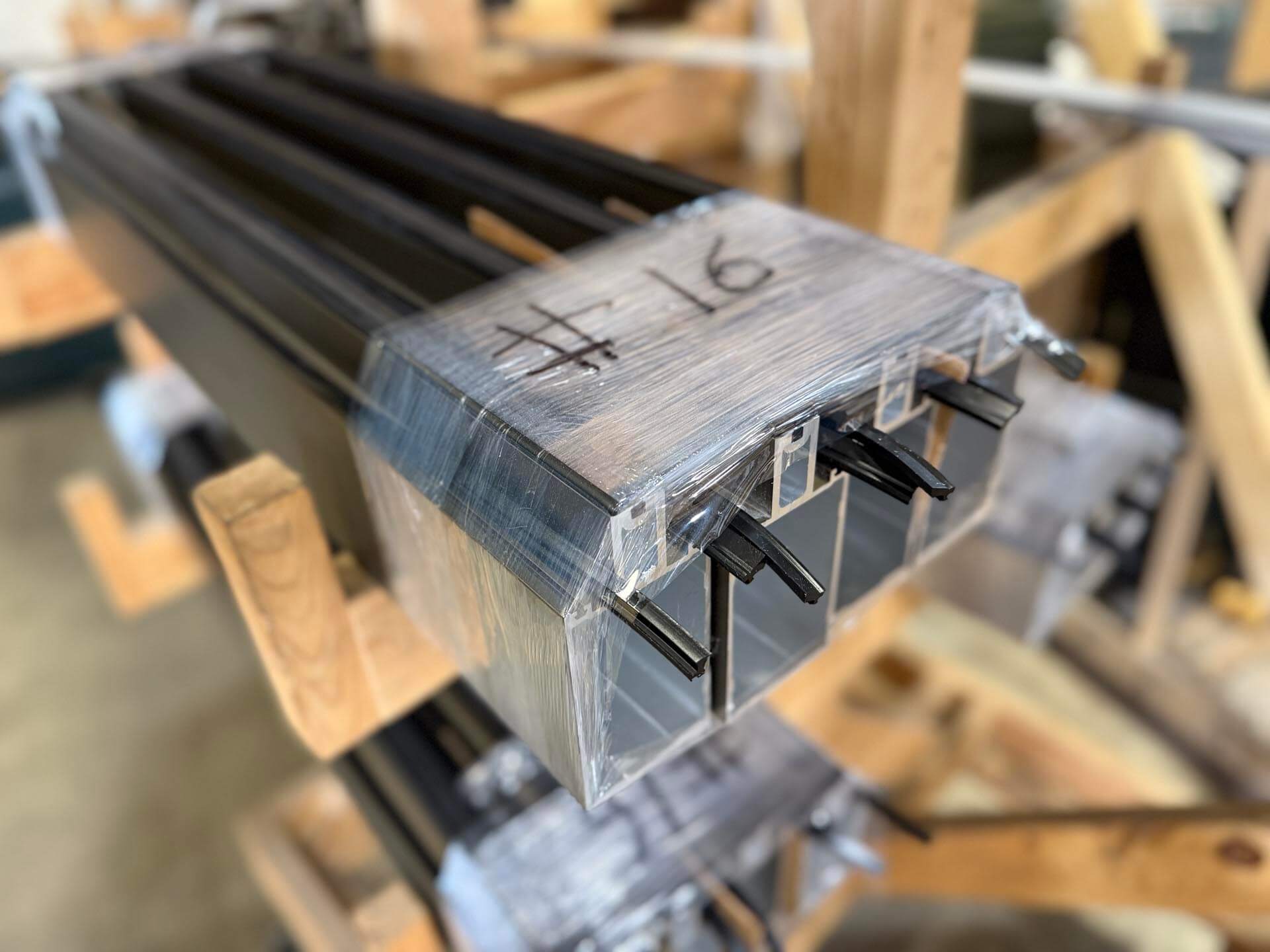
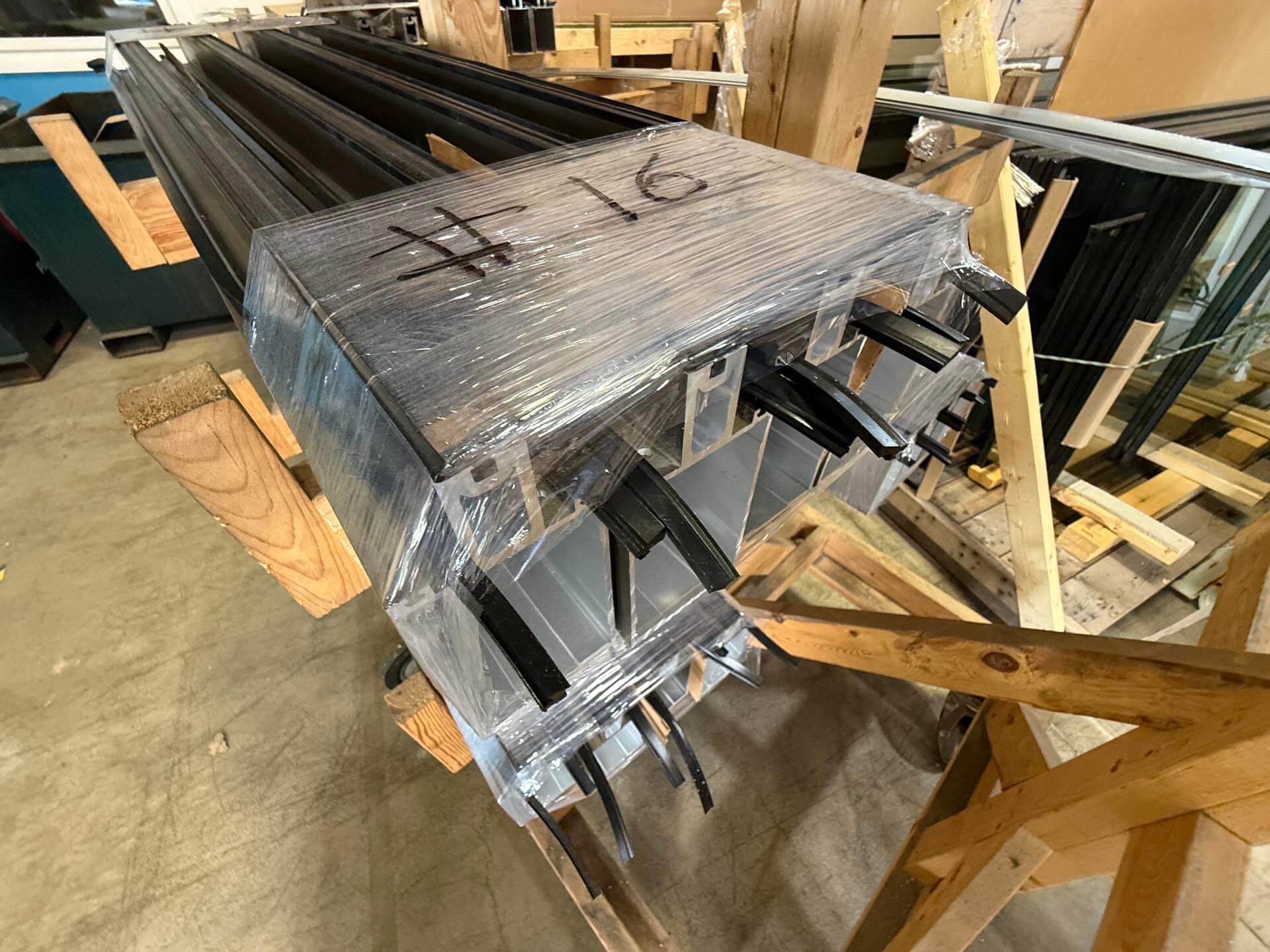
Separate every finished face from every other finished face. Foam blocks or foam sheet between stacked frames, cardboard or foam on every corner, and no finished face against a bare pallet or a steel rack. Strap over edge protectors, not over the finish, and strap tight enough that nothing shifts, because a frame that moves an eighth of an inch on every bump for three hours arrives with a polished stripe where it rubbed. Wrap with the weather in mind: stretch wrap keeps road grime off, but a wrapped bundle that gets rained on and sits in the sun can trap water against anodize and leave a stain, so open it and dry it on arrival. Bundle by opening or elevation so the installer handles each frame once, and label the bundle on the outside so nobody unwraps three to find one.
The tradeoff is time. Packing this way adds hours to a shipment, and a shop under pressure is tempted to skip the foam on the last two bundles, and those are the bundles that come back with a damage claim attached to the delivery ticket.
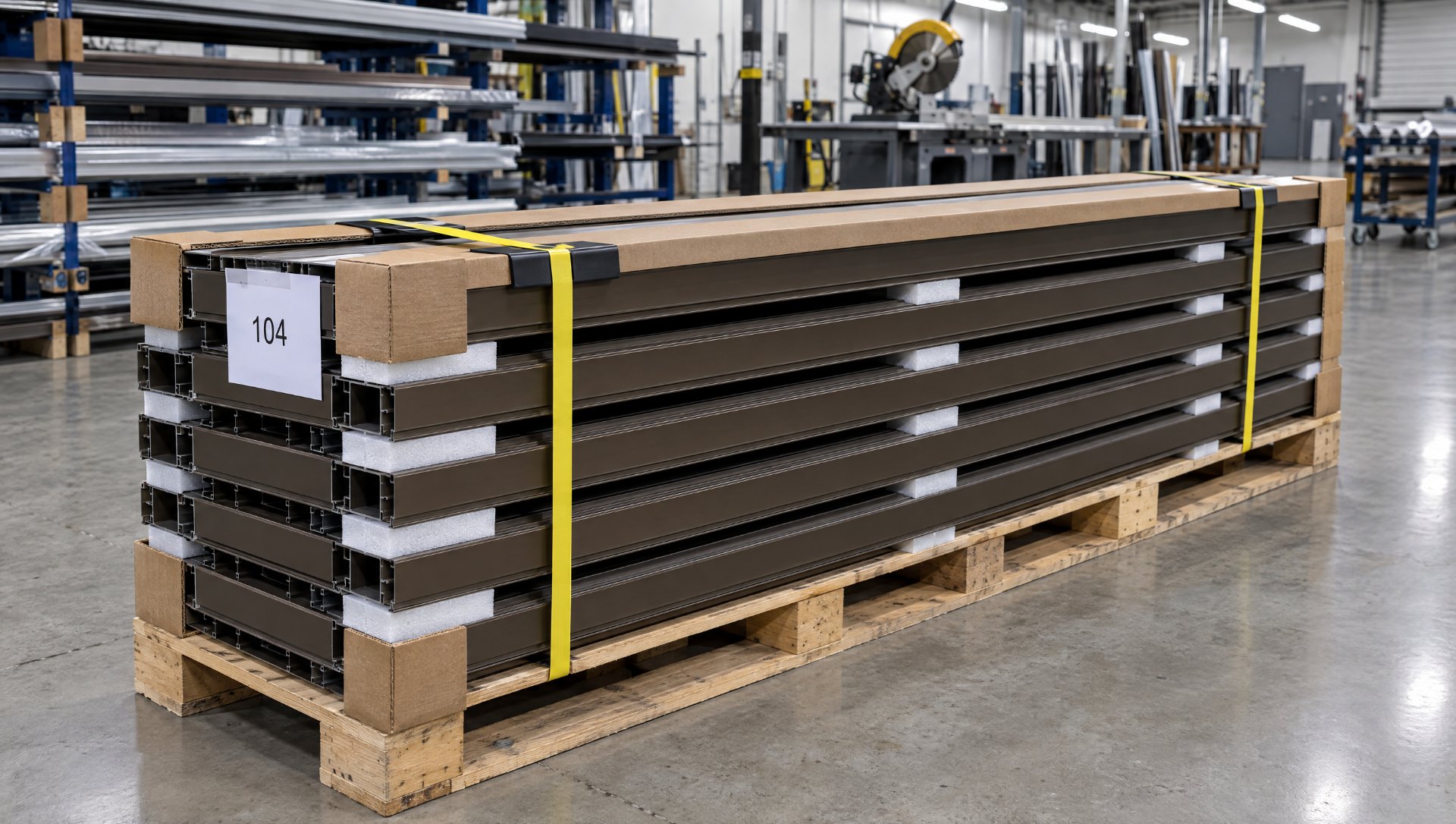
Here is the takeaway. Before you accept a frame as damaged, confirm the finish from the order, try detergent and then alcohol on the mark, and only then decide whether it is a touch-up or a replacement. Photograph every frame the day it is set. And tell your fabricator how you want the shipment packed and labeled before the first release, not after the first claim.
How WestMetal Ships Finished Aluminum
WestMetal fabricates storefront, curtain wall, and entrance packages and packs them the way the last section describes: foam between finished faces, corners protected, strapped over edge protectors, bundled and labeled by opening. The finish on the order is the finish on the paperwork, so when a mark does show up, the first question already has an answer. Tell us how your crew wants to receive it and we will pack it that way.
Learn the fundamentals on LearnGlazing
Two free LearnGlazing courses cover the ground this article skips. Introduction to Fabrication walks through shop operations and delivery considerations, and Different Levels of Fabrication and Assembly explains knocked-down, shop-assembled, and pre-glazed packaging. WestMetal Group is a LearnGlazing partner through the GlazierIQ network. Browse the full course catalog.
Bob Baumann
Sales, WestMetal Group
I have been on the fabrication side of glazing for a long time, and before WestMetal I ran a shop floor where the release was the thing that decided whether the week went well or badly. I still read every package that comes in before it goes to the saw, and I still call the PM when something on it does not add up. WestMetal Group is part of the GlazierIQ network with MP Drafting and LearnGlazing. Questions about an article or a package? Send it to Bob.